
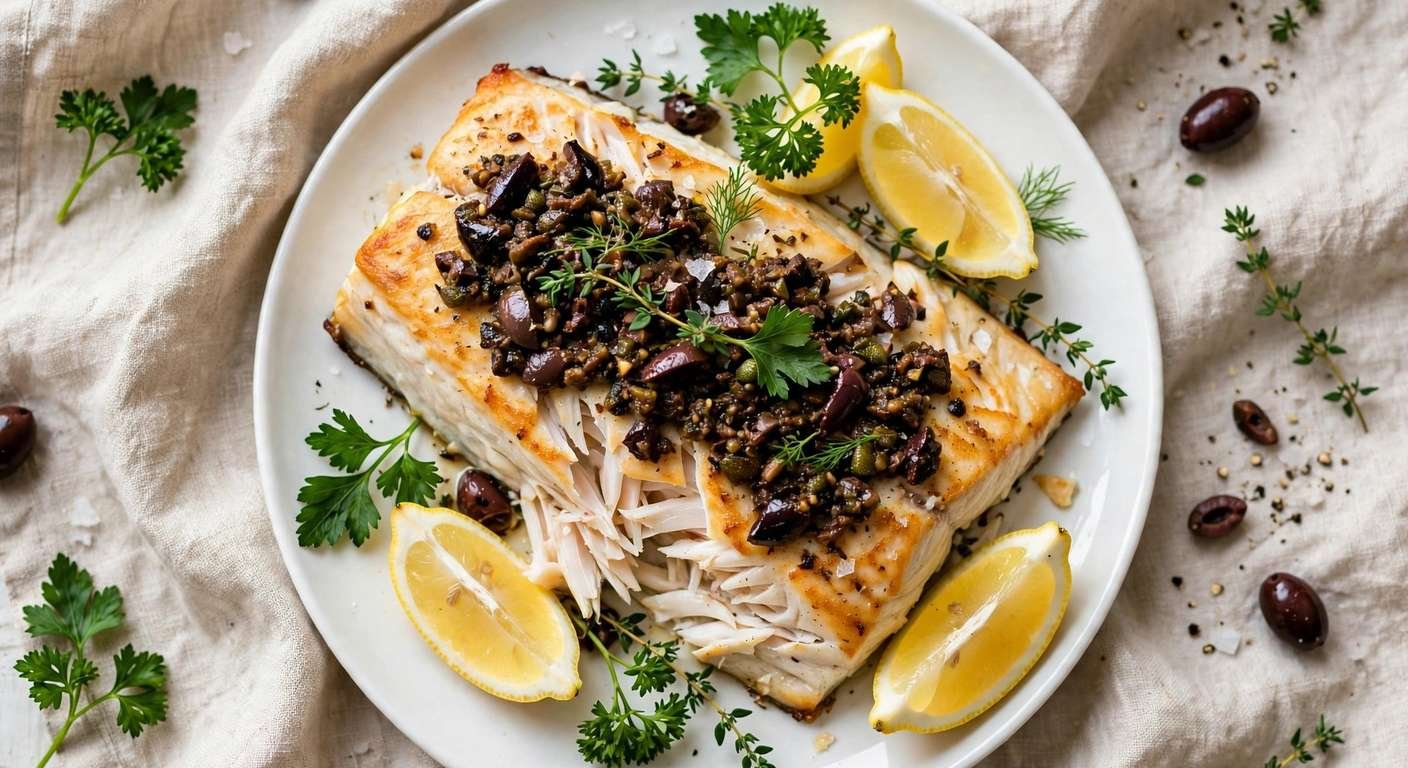
Some dinners feel like a gift to yourself, and this baked halibut with olive tapenade is one of them. Picture a thick, pearly fillet of halibut roasted until it flakes at the touch of a fork, crowned with a briny, garlicky tapenade of olives, capers, and lemon. It is a restaurant-elegant plate that takes thirty minutes and one baking dish.
Halibut is a natural fit for an anti-inflammatory keto table. As a lean white fish, it delivers high-quality protein and minerals like selenium and magnesium with almost no carbs, while the tapenade supplies the healthy fats: extra-virgin olive oil and olives are cornerstones of the Mediterranean diet, rich in monounsaturated fats and polyphenols associated with reduced inflammation. Anchovies quietly add omega-3s without any fishy taste.
Prep time: 15 mins | Cook time: 15 mins | Total time: 30 mins | Servings: 4
KEY TAKEAWAYS
- An elegant keto dinner ready in 30 minutes with only 3 grams of net carbs per serving.
- Halibut provides lean protein plus selenium and magnesium; the tapenade adds Mediterranean monounsaturated fats and polyphenols.
- Olive oil, olives, capers, garlic, and lemon are classic anti-inflammatory ingredients in one bold topping.
- Naturally gluten-free, grain-free, and dairy-free — fitting keto, paleo, and Mediterranean patterns at once.
TABLE OF CONTENTS
- Why This Recipe Works
- Ingredients
- Step-by-Step Instructions
- Nutrition & Macros
- Tips & Variations
- Storage & Meal Prep
Why This Recipe Works
Halibut earns its place for nutritional and practical reasons. It is one of the most protein-dense fish available, with a firm, meaty texture that satisfies like a steak. It is rich in selenium, which supports the body’s antioxidant defenses, and provides magnesium and potassium — electrolytes keto eaters should watch, since low-carb diets increase their excretion. Because halibut is very lean, it pairs perfectly with a fat-forward topping that rounds out the keto macro profile.
The tapenade concentrates the anti-inflammatory credentials. Extra-virgin olive oil’s polyphenol oleocanthal is noted for inflammation-modulating properties; olives contribute hydroxytyrosol and other phenolic compounds; capers add the flavonoid quercetin; and garlic and lemon bring allicin and vitamin C. Practically, this recipe is engineered for success: thick halibut fillets roast gently and evenly without drying out, and the tapenade can be made entirely ahead — it actually tastes better after the flavors meld.
Ingredients
- 4 halibut fillets, about 6 oz (170 g) each, at least 1 inch (2.5 cm) thick
- 2 tbsp (30 ml) extra-virgin olive oil, plus more for the baking dish
- 1 tsp kosher salt
- 1/2 tsp freshly ground black pepper
- 1 lemon, half juiced and half cut into wedges for serving
For the olive tapenade:
- 3/4 cup (100 g) pitted kalamata olives
- 1/2 cup (65 g) pitted green olives (such as Castelvetrano)
- 2 tbsp (20 g) capers, drained and rinsed
- 2 anchovy fillets, minced (optional but recommended)
- 2 cloves garlic, minced
- 1/3 cup (80 ml) extra-virgin olive oil
- 1 tbsp (15 ml) fresh lemon juice
- 1 tsp lemon zest
- 2 tbsp fresh parsley, chopped
- 1 tbsp fresh oregano leaves, chopped (or 1 tsp dried oregano)
- 1/4 tsp red pepper flakes
- Freshly ground black pepper, to taste
Step-by-Step Instructions
- Make the tapenade first. Add the kalamata olives, green olives, capers, anchovies (if using), and garlic to a food processor. Pulse 8 to 10 times until coarsely chopped — you want texture, not a paste.
- Transfer to a bowl and stir in the 1/3 cup olive oil, lemon juice, lemon zest, parsley, oregano, and red pepper flakes. Season with black pepper and adjust to taste — it should be boldly briny and bright. Set aside at room temperature.
- Preheat the oven to 425°F (220°C) and lightly oil a baking dish. Pat the halibut fillets completely dry with paper towels — essential for good browning.
- Rub the fillets with the 2 tablespoons of olive oil, season generously with salt and pepper, and arrange in the dish with space between them. Squeeze the juiced lemon half over the fish.
- Roast 12 to 15 minutes, depending on thickness. The halibut is done when opaque throughout and flakes easily with a fork, or when a thermometer reads 130–135°F (54–57°C) for a moist, just-cooked center.
- Rest 3 minutes — residual heat finishes the cooking gently. Spoon tapenade generously over each fillet and serve with lemon wedges.
Nutrition & Macros
Per serving (one fillet with tapenade), this dish is exceptionally keto-friendly: nearly zero carbs, substantial protein, and calories from heart-healthy monounsaturated fats — a textbook overlap of Mediterranean anti-inflammatory eating and keto macros.
| Nutrient | Per Serving |
|---|---|
| Calories | 420 |
| Net carbs | 3 g |
| Fat | 28 g |
| Protein | 36 g |
| Fiber | 1 g |
Tips & Variations
- Buy thick fillets. Halibut thinner than 1 inch overcooks quickly; if yours are thin, roast 8 to 10 minutes and check early.
- Pull the fish slightly early. It keeps cooking from residual heat, so removing it at 130°F (54°C) gives a moist, flaky result.
- Swap the fish: this tapenade is magnificent on cod, sea bass, mahi-mahi, salmon, or grilled chicken thighs.
- Make the tapenade ahead — it keeps a week refrigerated and improves after a day. Bring to room temperature before serving.
- Round out the plate with roasted asparagus, sautéed spinach with garlic, or an arugula salad with lemon and olive oil.
Storage & Meal Prep
Cooked halibut is best fresh, but leftovers keep 2 days refrigerated in an airtight container. Reheat very gently — a 275°F (135°C) oven for 10 minutes — to avoid drying it out. Store leftover tapenade separately; it keeps a week and is excellent on cucumber slices, scrambled eggs, or cauliflower mash.
For meal prep, make a double batch of tapenade on the weekend and roast fresh fillets on the night you eat, since the fish takes only 15 minutes. The tapenade also freezes well for up to 3 months.
FAQs
What does halibut taste like? Is it fishy?
Halibut is one of the mildest, least fishy fish available, with a clean, slightly sweet flavor and firm flake. If you usually avoid fish, halibut is an excellent starting point, and the bold tapenade complements it without overwhelming it.
Can I use frozen halibut?
Yes. Thaw it completely in the refrigerator overnight and pat it very dry — frozen fish releases more moisture. Never roast from frozen, as the exterior will overcook before the center is done.
Do I have to include the anchovies?
No, but they are worth trying — they melt into the tapenade and add deep savoriness with no detectable fishiness. Omit them and add an extra pinch of salt plus a few more capers if you prefer.
How do I know when halibut is done without a thermometer?
Press the thickest part gently with a fork and twist. If the flesh separates into clean, opaque flakes, it is done. If it looks translucent, give it 2 to 3 more minutes. Slightly underdone beats overdone — carryover heat finishes the job.
Can I make the tapenade without a food processor?
Absolutely. Finely chop the olives, capers, anchovies, and garlic by hand, then stir in the remaining ingredients. Hand-chopped tapenade has a lovely rustic texture many cooks prefer.