
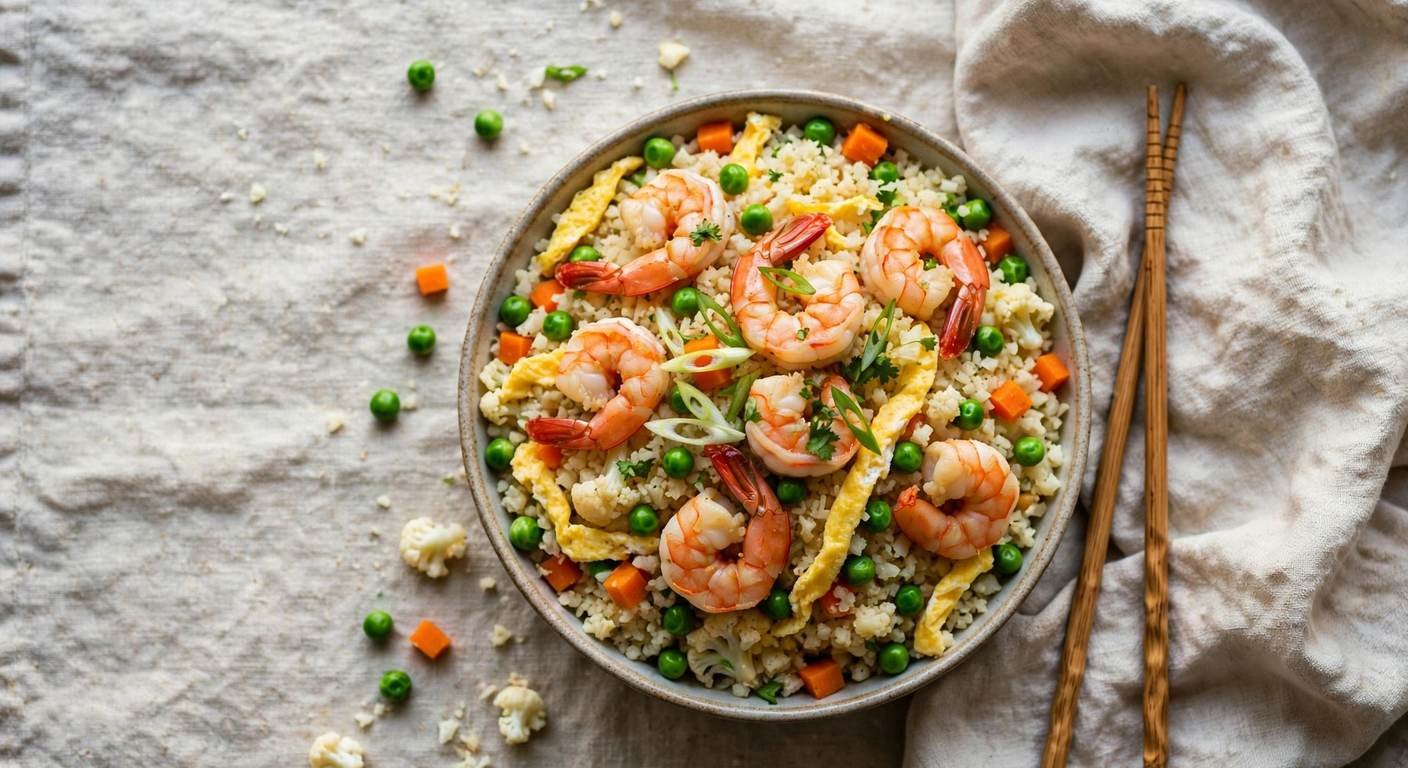
Friday-night takeout has met its match. This cauliflower fried rice with shrimp delivers everything you love about the restaurant classic — smoky wok flavor, plump juicy shrimp, sweet peas and carrots, and that savory soy-ginger punch — with a fraction of the carbs. It hits the table in 30 minutes and tastes so convincing that nobody guesses the “rice” is a vegetable.
Cauliflower is a cruciferous vegetable rich in sulforaphane and vitamin C, compounds studied for antioxidant and anti-inflammatory support. Shrimp brings lean protein plus astaxanthin, the antioxidant that gives shrimp its pink color and is researched for cellular protection. Ginger, garlic, and turmeric in the seasoning build a genuinely functional flavor base.
On keto, this is a weeknight workhorse: about 8 grams of net carbs, 20 grams of fat, and 28 grams of protein per serving. One big skillet, endless variations, and leftovers that reheat like a dream.
Prep time: 15 mins | Cook time: 15 mins | Total time: 30 mins | Servings: 4
KEY TAKEAWAYS
- Takeout-style fried rice at about 8 grams of net carbs per serving.
- Cauliflower provides sulforaphane and vitamin C; shrimp adds protein and astaxanthin.
- 28 grams of protein per serving with 20 grams of satisfying fats.
- One skillet, 30 minutes, endlessly customizable with any protein or vegetable.
- Excellent for meal prep — reheats beautifully for 4 days.
TABLE OF CONTENTS
- Why This Recipe Works
- Ingredients
- Step-by-Step Instructions
- Nutrition & Macros
- Tips & Variations
- Storage & Meal Prep
Why This Recipe Works
The genius of cauliflower rice is texture: riced fine and seared hard, it develops the toasty, slightly chewy bite of real fried rice while contributing only a few grams of net carbs per cup. Nutritionally it punches above its weight — cauliflower is a cruciferous vegetable whose sulforaphane is among the most studied plant compounds for supporting the body’s antioxidant defenses, plus a full day’s vitamin C in just a cup. Shrimp keeps the protein high and the calories reasonable while delivering astaxanthin and selenium. The seasoning trio of ginger, garlic, and a pinch of turmeric layers genuine anti-inflammatory compounds into every bite, and coconut aminos plus toasted sesame oil recreate that unmistakable takeout depth without soy or added sugar.
Technique is what separates great cauliflower fried rice from a soggy imitation, and this recipe nails the two critical rules. First, the cauliflower must be dry — squeezed in a towel if fresh-riced — and cooked in a ripping-hot pan without crowding, so it fries rather than steams. Second, the eggs are scrambled separately and folded in at the end, keeping them silky instead of lost in the mix. Keto-wise, the sesame oil and avocado oil provide the fats, the shrimp and eggs the protein, and the whole skillet lands near 8 grams net carbs — a takeout order would easily top 60.
Ingredients
- 1.25 lb (570 g) large shrimp, peeled and deveined, tails removed
- 1 large head cauliflower (about 2 lb / 900 g), riced — or 5 cups store-bought cauliflower rice
- 3 tbsp (45 ml) avocado oil, divided
- 2 tbsp (30 ml) toasted sesame oil, divided
- 4 large eggs, beaten
- 1 cup (130 g) frozen peas and carrots, thawed
- 4 scallions, sliced, whites and greens separated
- 4 garlic cloves, minced
- 1 tbsp (15 g) fresh ginger, grated
- 1/4 cup (60 ml) coconut aminos
- 1 tbsp (15 ml) rice vinegar (unseasoned)
- 1/2 tsp (1.5 g) ground turmeric
- 1/2 tsp (1 g) black pepper
- 3/4 tsp (4 g) sea salt, divided
- 1 tbsp (8 g) sesame seeds, for garnish
Step-by-Step Instructions
- If ricing fresh cauliflower, cut into florets and pulse in a food processor to rice-size grains. Spread on a clean towel and squeeze out as much moisture as possible — this step determines the final texture.
- Pat the shrimp dry and season with half the salt, the pepper, and the turmeric. Heat 1 tablespoon avocado oil in a large wok or skillet over high heat; sear the shrimp 90 seconds per side until pink and just opaque. Remove to a plate.
- Add 1 tablespoon avocado oil to the same pan. Pour in the beaten eggs and scramble quickly into soft curds, about 60 seconds. Remove to the shrimp plate.
- Add the remaining avocado oil and 1 tablespoon sesame oil. Spread the cauliflower rice in an even layer and cook undisturbed 2 minutes, then toss and cook 3 more minutes until golden in spots and tender-crisp.
- Push the rice aside; add the scallion whites, garlic, and ginger to the cleared space and cook 30 seconds until fragrant, then stir everything together.
- Add the peas and carrots, coconut aminos, rice vinegar, and remaining salt. Toss 1 minute until heated through.
- Return the shrimp and eggs to the pan. Drizzle with the remaining sesame oil, toss to combine, and cook 1 minute more.
- Serve hot, garnished with scallion greens and sesame seeds.
Nutrition & Macros
Estimates per serving for 4 servings. Peas and carrots add modest carbs; reduce or omit them to drop about 2 grams net carbs per serving.
| Nutrient | Per serving |
|---|---|
| Calories | 330 kcal |
| Net carbs | 8 g |
| Fat | 20 g |
| Protein | 28 g |
| Fiber | 3 g |
Tips & Variations
- Dry cauliflower is everything — squeeze fresh-riced cauliflower in a towel, and if using frozen, thaw and squeeze it too.
- High heat and no crowding: cook in batches if your pan is small, or the rice steams instead of frying.
- Swap shrimp for diced chicken, thin-sliced beef, or cubed tofu.
- Add diced bell pepper, mushrooms, or bean sprouts for extra crunch and variety.
- A teaspoon of chili garlic sauce or sriracha (sugar-free) adds heat for spice lovers.
- Make it a full meal-prep bowl with a fried egg on top.
Storage & Meal Prep
Refrigerate in airtight containers up to 4 days — this is one of the rare dishes that reheats almost as good as fresh. Warm in a hot skillet for 3 to 4 minutes to revive the texture, or microwave in 60-second bursts. Freeze up to 2 months; thaw overnight before reheating. For meal prep, portion into individual containers straight from the pan for grab-and-go lunches all week.
Why is my cauliflower rice soggy?
Moisture and crowding are the culprits. Squeeze the riced cauliflower dry, use high heat, cook in a single uncrowded layer, and don’t stir constantly — let it sit and brown.
Is cauliflower fried rice keto?
Yes — this version has about 8 grams of net carbs per serving versus 50+ in regular fried rice. The peas and carrots contribute most of the carbs, so reduce them for an even lower count.
Can I use frozen cauliflower rice?
Absolutely, and it’s a great shortcut. Thaw it completely and squeeze out the water in a towel before it hits the pan — frozen rice holds even more moisture than fresh.
Is shrimp anti-inflammatory?
Shrimp provides astaxanthin and selenium, both studied for antioxidant activity. Combined with turmeric, ginger, and garlic in this dish, it’s a solid part of an anti-inflammatory meal.
What can I use instead of coconut aminos?
Tamari or gluten-free soy sauce work if soy isn’t a concern — use 3 tablespoons instead of a quarter cup since they’re saltier. Fish sauce plus a pinch of sweetener is another option.