
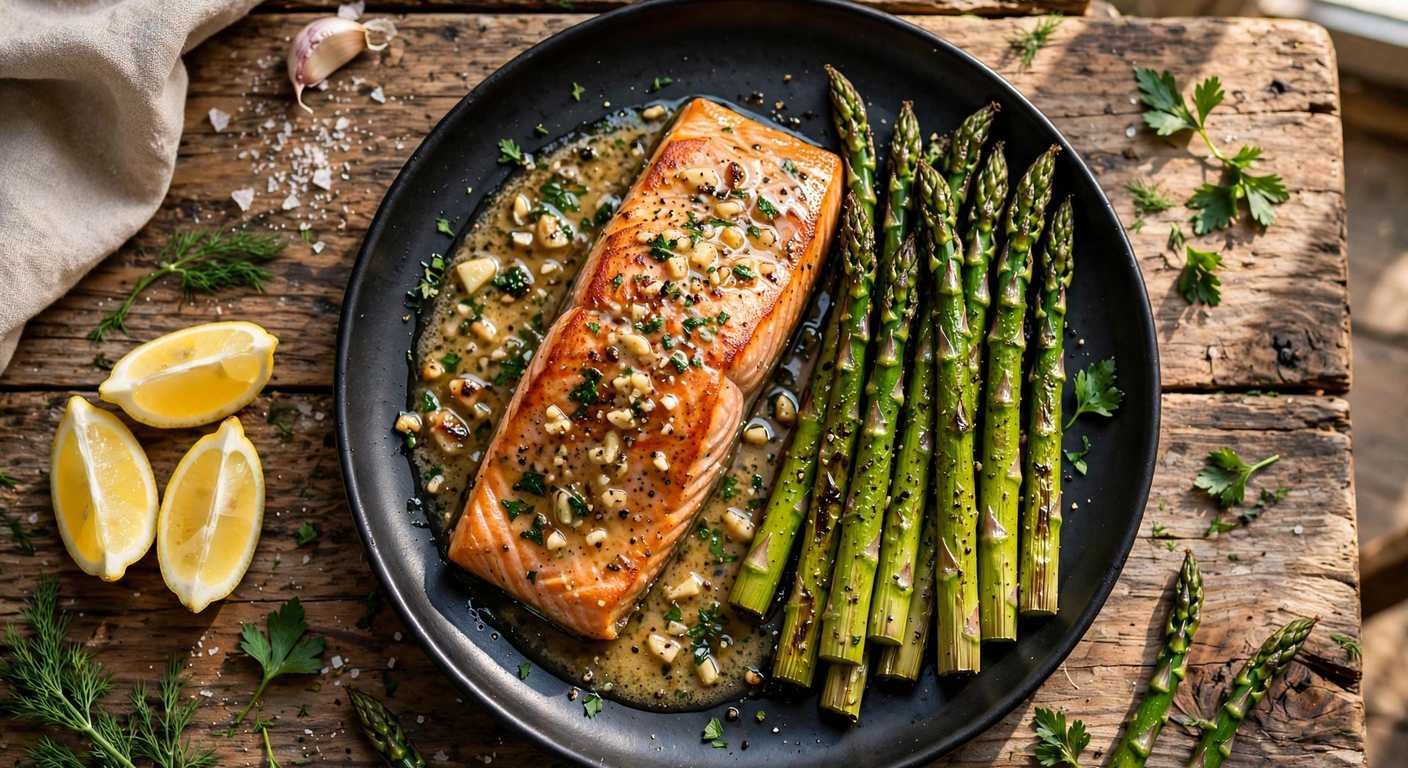
Some weeknights demand a dinner that is fast, impressive, and genuinely good for you — and this garlic butter salmon with asparagus answers all three. Flaky salmon with crisp golden edges, tender asparagus, and a silky lemon-garlic butter sauce come together in a single pan in about 20 minutes. It tastes like a restaurant dish, yet asks almost nothing of you.
Salmon is one of the best foods for an anti-inflammatory diet. It is loaded with omega-3 fatty acids, particularly EPA and DHA, among the most evidence-backed nutrients for helping the body manage inflammation. Asparagus adds antioxidants and prebiotic fiber, while garlic and olive oil bring their own well-studied benefits for heart and immune health.
For keto eaters this recipe is a dream: quality protein, generous healthy fats, and only about 4 grams of net carbs per serving. The asparagus roasts alongside the fish, so cleanup is minimal and dinner lands before hanger sets in.
Prep time: 5 mins | Cook time: 15 mins | Total time: 20 mins | Servings: 4
KEY TAKEAWAYS
- A 20-minute one-pan dinner with restaurant-quality flavor and minimal cleanup.
- Salmon delivers omega-3s (EPA and DHA) that support an anti-inflammatory diet.
- Only about 4 grams of net carbs per serving — firmly keto-friendly.
- Asparagus, garlic, and lemon add antioxidants and brightness without carbs.
- Easy to scale for guests and simple to adapt with different herbs.
TABLE OF CONTENTS
- Why This Recipe Works
- Ingredients
- Step-by-Step Instructions
- Nutrition & Macros
- Tips & Variations
- Storage & Meal Prep
Why This Recipe Works
The health case for salmon starts with omega-3 fatty acids. Salmon is an excellent source of EPA and DHA, the long-chain omega-3s most directly linked to lower inflammatory markers in research. Since chronic low-grade inflammation is tied to joint pain and cardiovascular risk, making fatty fish a weekly habit is one of the simplest dietary upgrades available. Asparagus contributes antioxidants and prebiotic inulin fiber that feeds a healthy gut microbiome — and gut health and inflammation are deeply connected. Garlic adds allicin and sulfur compounds studied for immune and cardiovascular support, while lemon brings vitamin C and freshness.
Keto-wise, this is about as clean as it gets. A salmon fillet supplies around 38 grams of complete protein, protecting muscle and keeping you full for hours, while butter and olive oil push fat to about 40 grams per serving — the fuel your body prefers in ketosis. Asparagus keeps net carbs near 4 grams. No breading, no sugary glaze, no hidden starch. The method matters too: a hot sear plus a brief oven finish gives crisp skin and a buttery interior with no flour coating, and the asparagus roasts in the same pan, soaking up lemon-garlic butter for maximum flavor with zero extra effort.
Ingredients
- 4 salmon fillets, 6 oz (170 g) each, skin-on preferred
- 1 lb (450 g) asparagus, tough ends trimmed
- 4 tbsp (60 g) unsalted butter, divided
- 2 tbsp (30 ml) olive oil, divided
- 5 garlic cloves, minced
- 1 lemon: half juiced (about 1 tbsp / 15 ml), half cut into wedges
- 1 tsp (3 g) lemon zest
- 1 tsp (5 g) sea salt, divided, plus more to taste
- 1/2 tsp (1 g) black pepper, plus more to taste
- 1/2 tsp (1.5 g) smoked paprika
- 2 tbsp (8 g) fresh parsley, chopped
- 1 tbsp (3 g) fresh dill (optional), chopped
Step-by-Step Instructions
- Preheat the oven to 425°F (220°C). Pat the salmon very dry — the secret to crisp skin — and season the flesh with half the salt, the pepper, and the smoked paprika.
- Toss the asparagus with 1 tablespoon olive oil, remaining salt, and pepper; spread in a single layer on a large rimmed sheet pan.
- Heat the remaining olive oil and 1 tablespoon butter in a large oven-safe skillet over medium-high heat until foaming. Sear the salmon skin-side down for 4 minutes undisturbed, pressing gently the first 30 seconds so the skin crisps evenly.
- Flip carefully. Add the remaining butter, garlic, lemon zest, and lemon juice; tilt the pan and spoon the foaming garlic butter over the fillets for 1 minute.
- Arrange the asparagus around the salmon in the skillet. Roast 5 to 7 minutes, until the salmon flakes easily and the asparagus is tender-crisp — 125–130°F (52–54°C) internally for medium.
- Rest 2 minutes, scatter parsley and dill over everything, add lemon wedges, and spoon extra pan sauce over each fillet.
Nutrition & Macros
Estimates per serving (one 6-oz fillet plus a quarter of the asparagus) for 4 servings. Fillet sizes vary, so treat these as close approximations that comfortably fit keto macros.
| Nutrient | Per serving |
|---|---|
| Calories | 520 kcal |
| Net carbs | 4 g |
| Fat | 40 g |
| Protein | 38 g |
| Fiber | 2 g |
Tips & Variations
- Choose fillets of even thickness so they cook at the same rate.
- No oven-safe skillet? Sear on the stovetop, then finish salmon and asparagus on a sheet pan in the oven.
- Swap asparagus for green beans, broccolini, or zucchini spears — all roast in the same time.
- Whisk a teaspoon of Dijon mustard into the butter sauce for tangy depth.
- Sprinkle a pinch of turmeric into the butter sauce for extra anti-inflammatory support — you will not taste it.
- Leftover salmon is excellent flaked over a green salad with olive oil the next day.
Storage & Meal Prep
Refrigerate leftovers in an airtight container up to 3 days. Reheat gently — a 275°F (135°C) oven for 10 minutes beats a microwave, which turns salmon rubbery. This dish shines freshest, so if meal prepping, cook the salmon just to medium-rare and keep lemon wedges separate. The garlic butter sauce can be made ahead and refrigerated for a week; melt to spoon over fresh fish or vegetables.
How do I know when salmon is done?
It should flake easily with a fork, opaque at the edges and slightly translucent in the center. A thermometer is most reliable: 125–130°F (52–54°C) for medium, with a few degrees of carryover as it rests.
Is salmon good for inflammation?
Yes — it is one of the richest sources of EPA and DHA omega-3s, strongly associated with lower inflammatory markers. Fatty fish two to three times weekly is a cornerstone of anti-inflammatory eating.
Can I use frozen salmon?
Yes, thawed completely first — overnight in the fridge is best. Pat extra dry and add a minute to the sear if needed.
What if I don’t like asparagus?
Green beans, broccolini, or zucchini roast beautifully in the same pan and time. Keep portions similar so nothing crowds the pan.
Can I make this dairy-free?
Yes — swap butter for ghee or olive oil plus a tablespoon of coconut cream for richness. The lemon-garlic flavor carries the dish either way.