
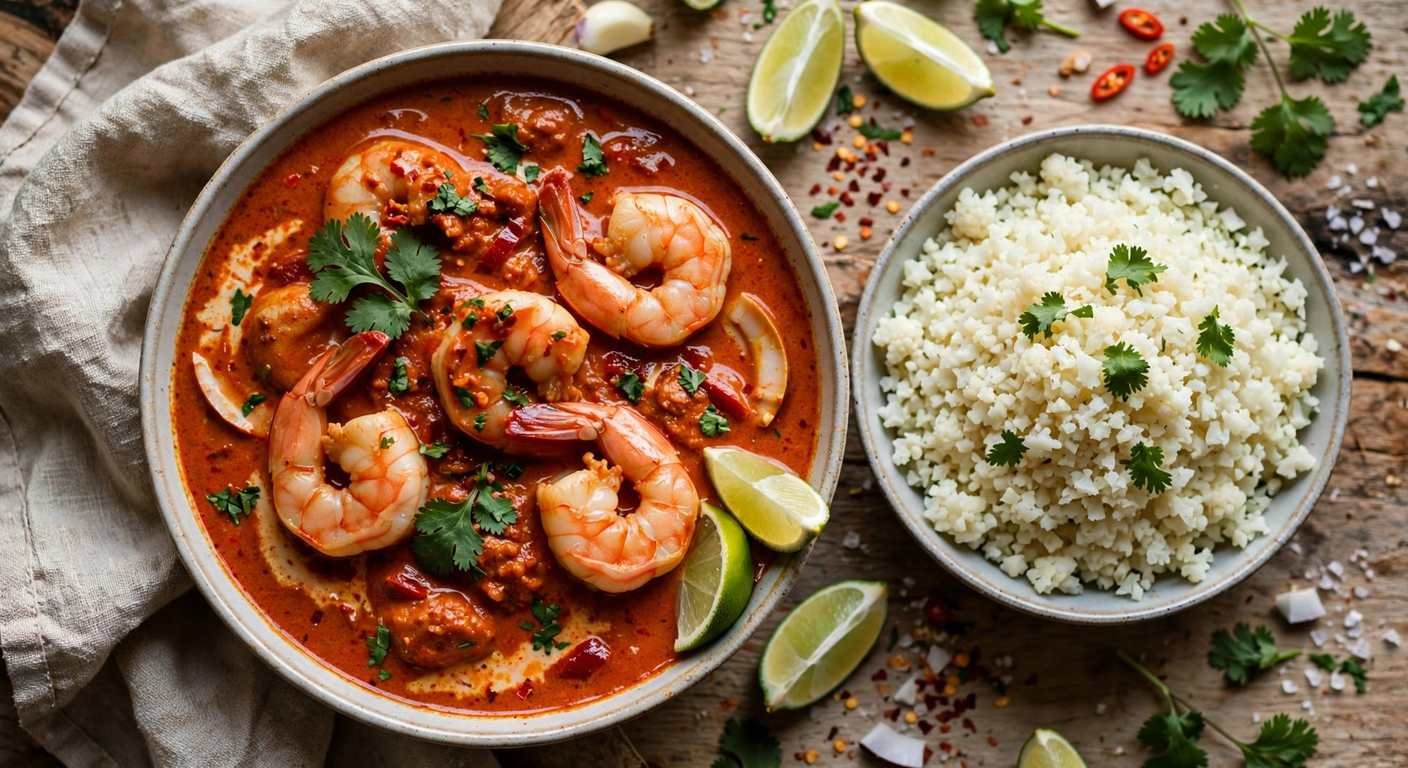
Some nights demand dinner in twenty minutes flat, and this keto coconut curry shrimp answers that call with a resounding yes. Plump shrimp simmered in a fragrant, golden coconut curry sauce — rich with ginger, garlic, and turmeric — land on the table faster than takeout could ever arrive, and they taste like something from your favorite Thai restaurant.
Shrimp is a natural keto ally: pure lean protein with virtually no carbs, ready in minutes, and endlessly versatile. The coconut milk provides the luscious fats that make this meal satisfying, while turmeric, ginger, and garlic layer in genuine anti-inflammatory power. A squeeze of lime at the end brightens everything and keeps each bite tasting fresh rather than heavy.
Serve it over cauliflower rice to catch every drop of sauce, and watch a weeknight transform. This is the recipe you will make when friends say they could never give up flavor on keto — one taste usually ends the conversation.
Prep time: 5 mins | Cook time: 15 mins | Total time: 20 mins | Servings: 4
KEY TAKEAWAYS
- From fridge to table in 20 minutes — faster than ordering takeout.
- Full-fat coconut milk creates a silky, satisfying curry sauce with healthy keto fats.
- Turmeric, ginger, and garlic deliver layered anti-inflammatory benefits in every spoonful.
- Shrimp cooks in minutes and provides lean protein with essentially zero carbs.
- Just 6 g net carbs per serving; pair with cauliflower rice for a complete meal.
TABLE OF CONTENTS
- Why This Recipe Works
- Ingredients
- Step-by-Step Instructions
- Nutrition & Macros
- Tips & Variations
- Storage & Meal Prep
- FAQs
Why This Recipe Works
Speed is the headline, but balance is the real story. Shrimp cook in minutes, so the sauce must come together just as fast. Blooming curry paste and turmeric in hot oil for sixty seconds wakes up their flavor compounds, and full-fat coconut milk carries them into a sauce that tastes slow-simmered in ten minutes.
Shrimp bring high-quality protein with negligible carbs; coconut milk supplies MCTs the body converts to ketones efficiently for steady energy. Fish sauce and lime add Southeast Asia’s salty-sour backbone without sugar — proof that bold flavor never needed sweetness.
Turmeric’s curcumin, ginger’s gingerols, and garlic’s sulfur compounds all land in one pan. Over cauliflower rice — rich in vitamin C and glucosinolates — this is a genuinely functional weeknight dinner disguised as takeout.
Ingredients
- 1 1/2 lb (680 g) large shrimp, peeled and deveined, tails on or off
- 1 can (13.5 oz / 400 ml) full-fat coconut milk, well shaken
- 2 tbsp (30 ml) coconut oil or avocado oil
- 1 medium yellow onion, thinly sliced (about 1 cup / 150 g)
- 1 red bell pepper, thinly sliced (about 1 cup / 120 g)
- 3 garlic cloves, minced
- 1 tbsp (15 g) fresh ginger, grated
- 2 tbsp (16 g) red curry paste (check label for no added sugar)
- 1 tsp (3 g) ground turmeric
- 1 tsp (2 g) ground coriander
- 1 tbsp (15 ml) fish sauce
- 1 tbsp (15 ml) fresh lime juice, plus wedges for serving
- 1/2 tsp fine sea salt, plus more to taste
- 1/4 cup (6 g) fresh cilantro leaves, chopped
- 2 green onions, thinly sliced
- Cauliflower rice, for serving
Step-by-Step Instructions
- Pat the shrimp dry with paper towels and season lightly with salt. Dry shrimp sear instead of steam, which gives better texture even in a quick curry.
- Heat the coconut oil in a large skillet or wok over medium-high heat. Add the onion and bell pepper and sauté for 3 to 4 minutes, until just softened but still vibrant.
- Stir in the garlic, ginger, curry paste, turmeric, and coriander. Cook for 60 to 90 seconds, stirring constantly, until deeply fragrant. This blooming step is where the curry’s flavor is built — do not rush it.
- Pour in the coconut milk, scraping up any browned bits from the bottom of the pan. Add the fish sauce and bring to a gentle simmer. Let the sauce bubble softly for 4 to 5 minutes, until slightly thickened and a shade deeper in color.
- Add the shrimp in a single layer. Cook for 2 to 3 minutes, turning once, just until the shrimp are pink, opaque, and curled into a loose C shape. Overcooked shrimp turn rubbery fast, so pull the pan off the heat the moment they are done.
- Stir in the lime juice and taste for salt, adding more fish sauce or salt as needed. The sauce should taste rich, salty, and bright all at once.
- Spoon over hot cauliflower rice and finish with the cilantro, green onions, and lime wedges. Serve immediately.
Nutrition & Macros
Estimates per serving, not including cauliflower rice (which adds about 2 g net carbs per cup). The fat comes mainly from coconut milk and oil; protein from the shrimp.
| Nutrient | Per serving |
|---|---|
| Calories | 390 kcal |
| Net carbs | 6 g |
| Fat | 26 g |
| Protein | 30 g |
| Fiber | 2 g |
Tips & Variations
- Don’t overcook the shrimp. They continue cooking in the hot sauce off the heat, so err on the side of pulling them early. A loose C shape means tender; a tight O means overdone.
- Choose your curry paste carefully. Brands vary in heat and sugar content. Taste a tiny bit first, and favor pastes with no added sugar or shrimp paste fillers if you are strict.
- Add greens. A few handfuls of baby spinach or chopped bok choy wilted into the sauce at the end add color, fiber, and nutrients.
- Make it milder. Use 1 tablespoon of curry paste and a pinch of sugar-free sweetener-free coconut cream swirled on top for a gentler, kid-friendly version.
- Swap the protein. Cubed chicken thigh, firm white fish, or scallops all work in the same sauce with adjusted cooking times.
- Meal-prep the sauce. The curry sauce (without shrimp) keeps beautifully for 4 days; reheat and add fresh shrimp for a 5-minute dinner later in the week.
Storage & Meal Prep
Store leftovers in an airtight container in the refrigerator for up to 3 days. Reheat gently over low heat just until warmed through — aggressive reheating will toughen the shrimp. The sauce itself can be made ahead and refrigerated for 4 days or frozen for up to 2 months; add freshly cooked shrimp when serving for the best texture.
For meal prep, portion the curry over cauliflower rice in four containers. The flavors meld nicely by day two, making this one of those rare seafood dishes that reheats respectably.
FAQs
Is coconut milk keto?
Yes. Full-fat canned coconut milk is high in fat and low in carbs (about 2 g net carbs per 1/3 cup), making it a keto staple. Avoid “light” versions, which are thinner and often contain additives, and sweetened coconut milk beverages, which are a different product entirely.
Can I use frozen shrimp?
Absolutely. Thaw them completely in the refrigerator overnight or under cold running water, then pat very dry before cooking. Excess moisture will thin the curry sauce.
How spicy is this curry?
With 2 tablespoons of red curry paste, it lands at a medium, warming heat. Reduce to 1 tablespoon for mild, or add sliced fresh chilies at the end if you like it fiery.
What can I serve instead of cauliflower rice?
Zucchini noodles, shirataki rice, or simply steamed broccoli all catch the sauce well. For a heartier option, a bed of sautéed cabbage works beautifully.
Why did my sauce split or look oily?
Coconut milk can separate if boiled hard or if the can was old. Keep the simmer gentle, shake the can well before opening, and choose brands without excessive guar gum for the smoothest sauce.